




Strengthening the role of the patient voice in regulatory science and FAIR data
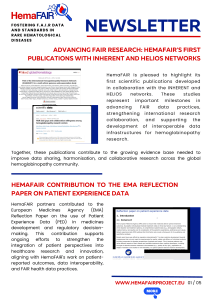
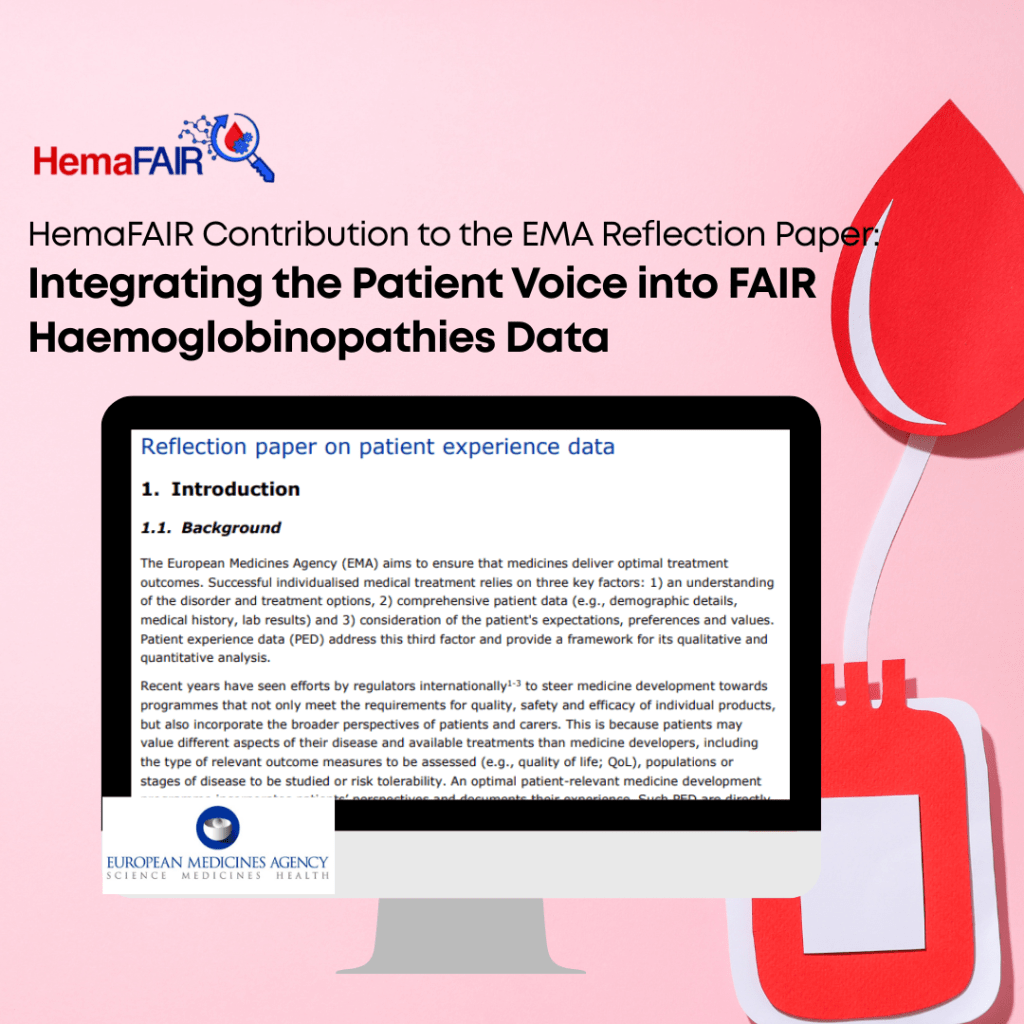
The HemaFAIR consortium has actively contributed to the European Medicines Agency (EMA) public consultation on the Reflection paper on patient experience data (PED), supporting the integration of patients’ perspectives into medicines development, regulatory evaluation, and healthcare decision-making.
The reflection paper marks an important step towards the systematic use of patient experience data across the lifecycle of medicinal products, recognizing that clinical outcomes alone do not fully capture the real impact of a disease or its treatment on people’s lives. Patient-reported outcomes, preferences, and insights from engagement activities are essential to inform benefit–risk assessment, clinical trial design, post-marketing surveillance, and health technology assessment.
HemaFAIR’s participation in this consultation reflects its commitment to FAIR, high-quality, and inclusive health data, ensuring that patient-generated evidence is not only collected but is also interoperable, reusable, and meaningful for research, regulation, and clinical practice.
🔗Read the EMA article here: https://www.ema.europa.eu/en/patient-experience-data-ped-reflection-paper#current-version-79577
Developing patient-reported outcome measures for national and international registries
In parallel, HemaFAIR is taking concrete steps to embed the patient voice in hemoglobinopathies data infrastructures.
As part of the project, a patient-reported outcome measure (PROM) instrument is being developed for:
-
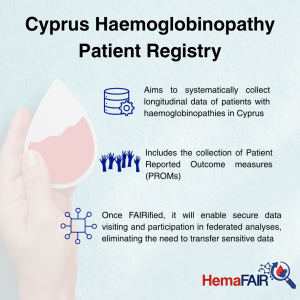
the Cyprus National Haemoglobinopathies Registry, and
-
the INHERENT network registry dataset.
This work will enable the systematic collection of data directly reported by patients, capturing quality of life, daily functioning, treatment burden, and other outcomes that matter most to people living with hemoglobinopathies.
By integrating these measures into established registries, HemaFAIR:
-
enhances the clinical and research value of registry data
-
supports more patient-centred study design and endpoint selection
-
enables evidence generation for regulatory and HTA processes
-
ensures that patient perspectives become part of routine data collection
Most importantly, this approach transforms registries into tools that reflect not only the disease but the lived experience of patients.
Why this matters for the hemoglobinopathy community
For rare and inherited anemias, where long-term disease burden and treatment impact are significant, understanding outcomes from the patient perspective is crucial.
The combined contribution to the EMA consultation and the development of PROMs within national and international registries demonstrates how HemaFAIR is:
-
bridging FAIR data and regulatory science
-
promoting patient-centred and inclusive research
-
enabling better evidence for decision-making and access to therapies
By aligning regulatory developments with real-world data infrastructures, HemaFAIR is helping to shape a future in which patient experience data are routinely collected, FAIR, and actionable.